School of Lucidity and Consciousness
Liberation Is Enlightenment
Academics / Schools & Departments
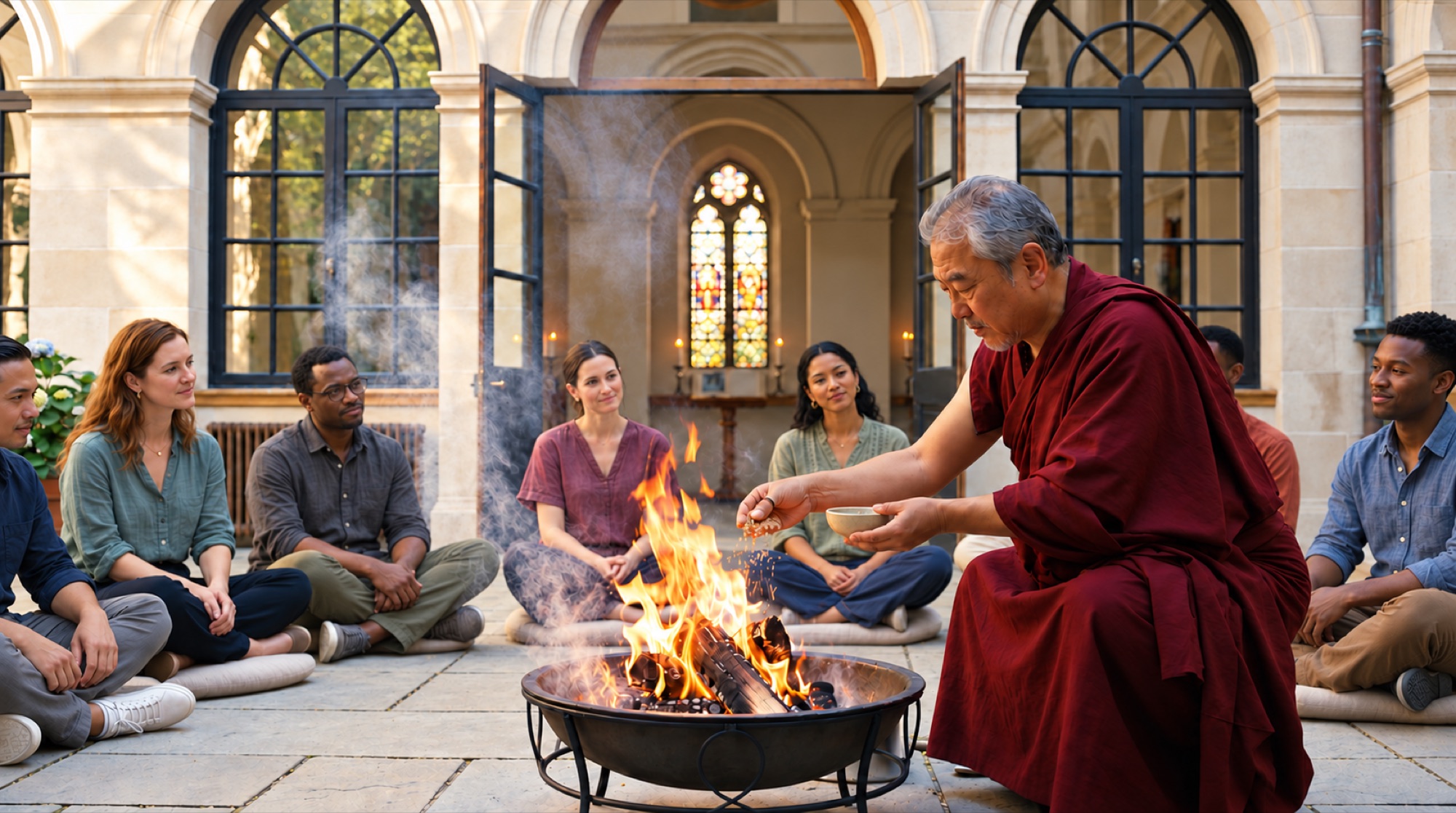
The School of Lucidity and Consciousness prepares people to free the mind and to live from that freedom in every condition. It draws on the great enlightenment traditions and restores to them the feminine and the full power of Eros, which root the sublime in the body and its desires. Here love, peace and creativity become available whatever the circumstances, and a prison can become a monastery. Graduates bring a clear and steady mind into every part of life, and take clarity, compassion and wisdom into the places where freedom is hardest to find. Liberation here is the dissolution of the fixed and inherited constructions of self that limit what a person can perceive, become and contribute. It has to be discovered directly: external authorities and inherited systems may offer maps, but they cannot substitute for the student’s own practice, observation and knowing.

Department of Contemplative Eros
The Department of Contemplative Eros studies Orgasmic Meditation, the physical practice of Eros, as a discipline of attention. Contemplative traditions make ordinary activity sacred by applying attention in a disciplined way. OM brings that same discipline to sexuality, the most powerful force in human life and the one a culture has most often demonized, commodified or spiritualized, and least often known directly. Where most practices are done alone, OM trains attention together with another person, so the capacity it builds is relational from the start: staying present with rising sensation, receiving, and feeling what is happening in someone else. OM is the foundational practice of feminine spirituality, the way meditation is the foundational practice of Eastern spirituality. It trains the nervous system for intimacy, with a partner and with humanity as a whole, and it builds empathy, compassion and attunement.
Following The Eros Sutras, Volume 3, students study the stroke, the two roles, the map of the spots, the eight stages and the levels of attention, so the practice can be understood from the inside and taught step by step. Orgasm here is far broader than climax, and each OM shows where attention holds steady, where it gets stuck and where it flows. At its most advanced the practice points toward what the tradition calls the Third, a shared current that belongs to neither partner, and toward a world where sexuality is a source of connection and insight. The expression of flourishing here is attention that can stay present with the full force of life.
Department of Altered States
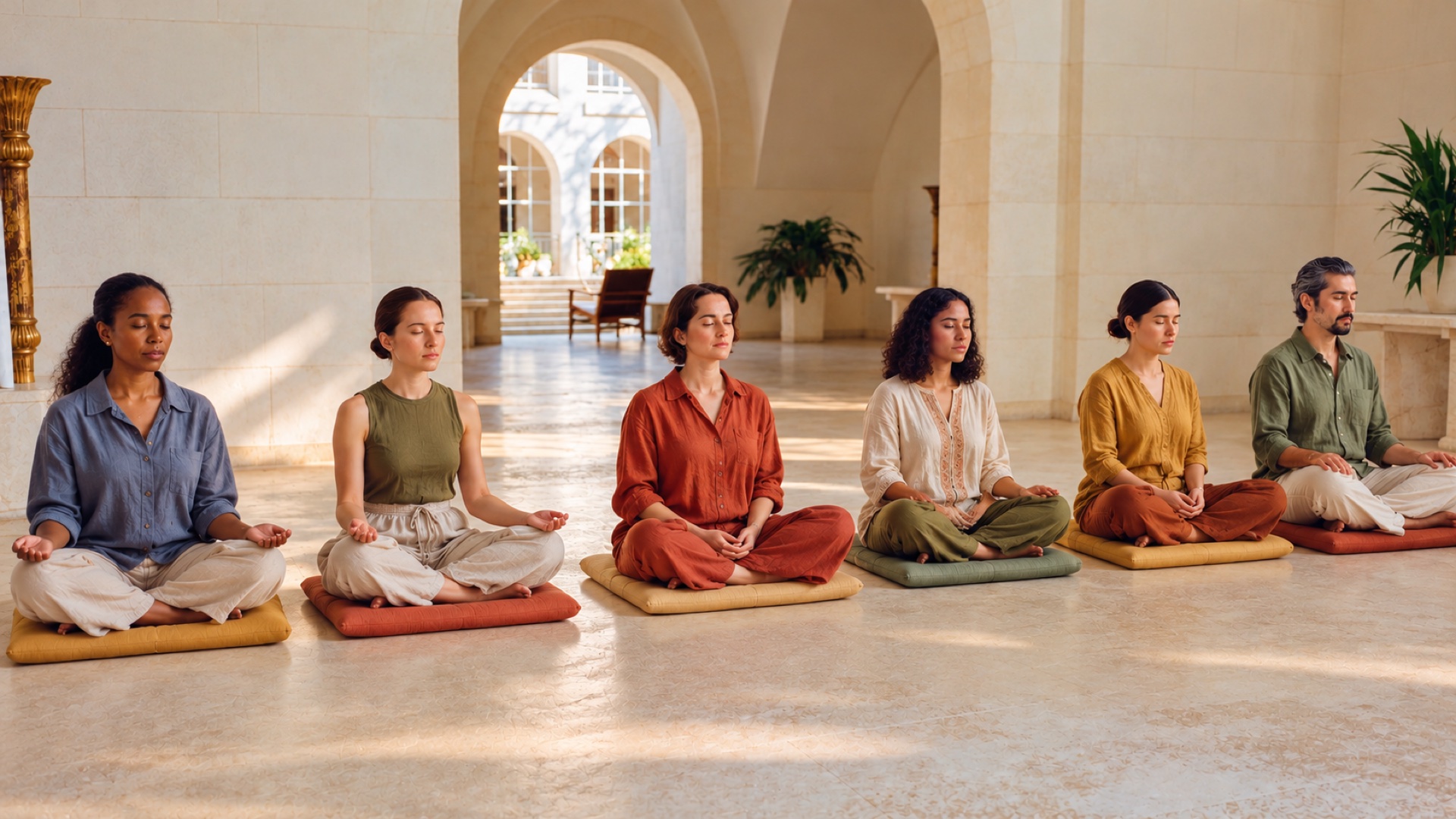
The Department of Altered States studies and practices lucidity, a clear awareness that holds steady in any condition. Most people have known moments of flow, when the self drops away and something larger moves through, and those moments pass. The department works to make that state stable, in every terrain. Students learn to move among different states without losing lucidity, taking that awareness into flow, dreaming, out-of-body experience, the bardo and the neuroscience of consciousness. Each becomes a field for examining the boundaries of consciousness and identity, and for learning how consciousness can move through different states and forms without becoming trapped in any one of them. The reach of this goes past the individual. Someone who can stay lucid through intensity, transition and even death can stay lucid in a crisis or a prison cell, and the territory of human inquiry grows to include the immaterial world where we dream, discover and create. The fixed mind, running the same thoughts and fears on repeat, is the jail; lucidity is the way out. The expression of flourishing here is freedom of mind in every condition.

Department of Wisdom Traditions
The Department of Wisdom Traditions follows Eros through the world’s traditions, from ancient Greek philosophy to Buddhism, Christianity, Kabbalah and the Western esoteric current, which again and again seem to be looking at the same reality. These traditions provide maps for working with energy, emptiness, devotion, transformation and the liberation of consciousness. They also lost something along the way. In the Eros reading of Buddhism, the enlightenment tradition was rooted in the feminine principle of Tara and in the understanding that sexual energy was potent enough to lead consciousness all the way to awakening, and as the tradition changed hands, both were set aside. The department reads the traditions with that loss in view and restores the feminine and the full power of Eros to them, rooting the sublime in the body and its desires. In the Western tradition, philosophy, contemplative practice and the art of living were once one pursuit, and here they come back together, so that study changes the one who does it. Students learn from the maps and continue beyond the places they describe, and they live a tradition from the inside through a month of Tibetan Buddhist practice. The expression of flourishing here is wisdom that is lived as well as known.
Department of Creative Arts
The Department of Creative Arts studies the artist’s life as a practice of Eros. Eros turns the pressure that builds inside a person into creative force, so that what might have become destruction becomes something generative. Art is one of the oldest technologies of liberation, one that allows identities to be expressed, revised, dissolved and re-formed, and the gift of it lives in every person. The department draws on the daimon, the Muse and genius, old ideas of a creative force that moves through a person and wants to come into form, and on Zen attention, image and theater as ways of perceiving directly and of discovering that personality is also a role. Students learn to stay in contact with the creative force as a work nears something true, and to turn a source of pain into a work of art. Art made this way is an offering: it shows others what flourishing looks and feels like, and draws them toward it. The expression of flourishing here is original expression, a person’s genius brought into form.